Walking onto a college campus feels like entering a world where they must constantly prove they belong. Once many students step foot on their college grounds they feel belonged and welcomed. But for many HBCU students, the experience is different: it’s rare, diverse, and a warm feeling you belong to a place where people are the same as you.
Celebrating HBCUS During Black History Month
In February 2026, Belleville High School honors Black History Month by recognizing the importance of Historically Black Colleges and Universities (HBCUs). These institutions were created for a purpose and for Black students to access quality, and affordable education, where they were largely excluded from higher education. Today, they remain spaces where culture, identity, and academic excellence grow together.
The Road to Revolution
HBCUs were first established in the 1800s to educate African-Americans who were denied education and opportunities elsewhere. Education during this period was more than learning, but empowerment. Many of these schools were founded in the direct response to segregation and inequality, offering pathways to opportunity and leadership.
The first HBCU ever founded in the United States was Cheyney University of Pennsylvania in 1837. From that single institution grew a nationwide network of colleges and universities committed to expanding access to education and strengthening communities.
HBCUs Today
HBCUs continue to serve students from diverse backgrounds while remaining deeply rooted in African-American history and experience. They provide strong academic programs along with supportive environments that encourage leadership, confidence, and cultural pride.
Institutions such as Howard University, Spelman College, Central State, North Carolina A&T, and many more are widely recognized for their programs in law, medicine, education, business, and public service.
Personal Connections to the HBCU Experience
For many families, the influence of HBCUs is deeply personal. Alumni from Central State University located in Wilberforce, Ohio, often describe their time there as life-changing. They speak of an environment where students feel supported academically and socially, allowing them to grow into confident leaders prepared for future success.
Brittney, a educator, alumni of Central State University, a AKA sorority member, highlighted how her own perspective on the shared struggles or connections between your own community and the black community changed when being in a HBCU environment.
“Being in a HBCU environment has deeply impacted the way I view the shared struggles within my own community and the Black community as a whole. Before this experience, I understood inequality in a general sense, but being surrounded by students, faculty, and administrators who openly discuss and navigate these challenges has made those realities feel more personal and immediate.” She claims. “Through my time in this environment, I have come to realize that although the settings may differ, the underlying struggles, financial inequality, underrepresentation, and systemic barriers connect us. These shared challenges have strengthened my sense of unity, Rather than dividing us, our different experiences within the broader Black community push us to support one another and work collectively toward progress and long-term change.”
These experiences highlight why representation in education matters. HBCUs provide not only degrees but also mentorship, community, and a sense of belonging.
HBCU Representation in Entertainment
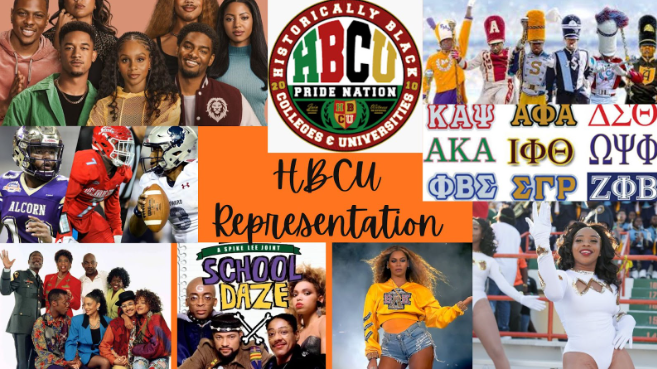
HBCUs have a profound impact on the entertainment industry influence pop culture through portals in film and television like A Different World, School Daze, and Drumline. They reshape the industry and drive Black storytelling such as fashion, music, and enduring a cultural identity.
Celebrity HBCU Spotlight
Some notable celebrity HBCU alumni include Chadwick Boseman (Howard University), Oprah Winfrey (Tennessee State University), Dr. Martin Luther King Jr. (Morehouse College), Erykah Badu (Grambling State University), with many more.
Why Recognition Matters
Black History Month is a time to reflect on the achievements and contributions of African Americans throughout history. Recognizing HBCUs during this time emphasizes the role education has played- and continues to play- in expanding opportunity and strengthening communities. HBCU legacies continue to thrive, and by learning more about them could gain a deeper understanding of how education serves as a tool for progress.