



















Most people have a preconceived idea of what a “good” student looks like, mainly through what we are taught as younger students. A good student does their work on time, has great attendance, pays attention in class, and makes great grades. Should anyone feel any less for not meeting these expectations? Especially if they still care?
It’s common for students, especially high achievers, to feel like they have failed if they are not perfect. Whether it’s pressure from parents, peers, or their own personal goals in life, school has become more about grades and scholarships than learning. Stress is high, and expectations only grow higher each year you progress into adulthood. If you fall behind, you need to pick yourself back up again before it’s too late. But what if lately, or for a while, it has felt like you can’t?
Your eyes trace your to-do list over and over again. You know what you need to do, but your body is frozen. Even if you manage to haul yourself out of bed with your bag, notebooks, pens, and all, sit at your desk, and will yourself to start, you end up freezing again. Maybe your mind creates a larger to-do list. “I have to shower before anything else. Dinner will be soon, so I’ll eat first for energy. Oh, and the dishes have to be washed after. My room is pretty messy too…” That night, where maybe it didn’t matter so much, you didn’t get anything done. But then the nights build up, and for the first time, after chasing perfection for so long, you’re in the position you used to frown upon. Assignments aren’t getting turned in on time, grades are dropping, and there’s this immense guilt.
A lot of the time, there are other factors that lead to this shift in performance, but one that I feel isn’t addressed properly is depression. For many students, the struggle isn’t laziness or a lack of effort. It’s something much harder to explain.
Depression has plenty of stigma. People think they’ve already gotten you figured out. You’re sad all the time, right? Common stereotypes claim depressed people wear all black, they never smile, they’re always down in the dumps, or they smile when they clearly don’t mean it. Some aestheticize the experience that they’ve never had, and many misuse its definition.
Depression isn’t only an emotion. While someone can feel depressed for a period of time, depression is also a mental illness that you can’t just snap out of or get over. It doesn’t just mean you’re “sad” all the time. Depressed people don’t always only feel sadness and can go about their day communicating with others as everyone else does. A lot of the time, people never know unless they are told. Depression can express itself through anger, anxiety, or isolation, not just sadness. Depressed people can look like anyone, and to stereotype a mental illness is to allow it to go further unaddressed.
These misconceptions can make school even harder for students who are struggling behind the scenes.
When you’re a student who is handling the weight of depression on your shoulders, to the outside world, it’ll look like you no longer care anymore. You may even feel apathetic at times, then guilty, because you may remember a time when you did study, when you did turn in your work, and when it felt like people believed in you.
Following all this is the odd feeling of having to tell your teachers what you’re going through. With some, you don’t have to go into major detail. With others, you may have to.
My sophomore year, I noticed my lack of work and my low motivation. At the time, I didn’t understand what was wrong. I had always wanted to excel in my studies, and suddenly I slowly started doing everything I knew not to do. Inevitably falling asleep when I got home, never touching my homework, and hardly studying. I pleaded for a therapist, someone to talk to. I took action. Still, eventually it got to the point where I had to tell a teacher.
Telling a teacher your personal struggles can go so many ways. For me, it had always felt like I was making excuses for myself. I hated asking for extended deadlines or for additional time to study. I hated the looks on their faces, some of pity and some of indifference. Tears always filled my eyes when I talked about myself. My hands shook, and it felt like my chest would cave in.
I didn’t want anyone to pity me or see me as a lost cause. I always felt like I had overshared. I’d skim over the words “I have depression” shakily and hastily, then spend the rest of the day regretting every detail I shared. The next day, the shame would follow me back into the classroom because now they knew.
For me, that guilt is still there because I have always felt burdensome. I never wanted anyone to feel like I was fragile or incapable, like I needed things handed to me. What I’ve learned is that while it doesn’t hurt to ask, it still is important to remember not to expect anything. Not every teacher will understand or help you in the way you need. Some may expect you to pull yourself together before a certain time. Some do know what it’s like and will guide you. Whenever you reach out to someone, no matter how guilty you may feel, remember that you are communicating. So even if everything is missing or your grades look bad, you are showing that you very much still do care.
While talking to teachers can be difficult, those conversations aren’t always the hardest ones to have.
When it comes to family and peer relationships, the weight feels much heavier. When you have always felt eyes on you expecting greatness, never anything lackluster, you feel like a failure. Your parents or guardian may press you about your performance lately, asking what’s going on in school. They may urge you to pay attention, take items or privileges away, blame your phone, or blame you.
Depending on what kind of parent you have, you may or may not get the support you need. My mom, who I am forever grateful for, has provided me resources and a space to speak. Even when sometimes it feels like she doesn’t understand, I’m grateful that she does what she can.
If you don’t have this support, maybe it’s easier to turn to a friend or an adult at school, or maybe it isn’t easy at all. Telling anyone is risky. You’re honest, raw, and vulnerable, and you’re letting someone in. A lot of the time, we feel as if we can trust others and they prove otherwise.
When it comes to peers, especially those who care deeply about school as well, shaming arises. You may hear things like, “Of course you didn’t study,” or “You never do any of your work.” Jabs will be disguised as jokes. You may pretend you’re alright with it, but deep down you shame yourself as well.
It isn’t easier to tell them either. My advice is that you don’t have to tell everyone. Everyone isn’t going to understand. If you have a friend or two that you trust, tell them if you want to. Never feel like a burden just for expressing your feelings and letting your emotions show. With this in mind, do remember that no friend can replace a therapist or psychiatrist.
The effects of depression don’t stop with assignments and relationships.
Attendance alongside grades may suffer. Your friends and teachers will notice you “never show up.” Once you skip, you’re drawn to skip more. There were many days I preferred sleeping away the day, temporarily leaving all my anxieties at school.
When I stayed home, I watched the clock whenever I was awake. I would think about what my friends were doing, what hour they’d be in, then I felt the same guilt all over again, knowing that I should be there. That I gave up on the day before it even started.
Many days, it felt like I was cemented to my bed. There’s this frustration that comes with still caring. I always felt weak for not being able to perform like I used to. It’s important to remember that struggling with that doesn’t make you weak.
Isolation is common, and it may even feel good in the moment, but eventually you do need to get out of bed and face your day. No, it doesn’t happen easily or quickly, not for everyone. It’ll be slow and grueling. You’ll still hear bitter accusations that you are no longer a good student or that you don’t care. But to me, and to anyone who understands what depression is like, being a good student is about trying your best and taking initiative to do what you can.
I see you, and I believe there is something better along the way. Your worth is not tied to your grades or even how others perceive you. Hopelessness is common along the way, and there may be days when getting out of bed feels impossible. Depression is known to take until there is no longer anything left to give, so remember not to let it.
If you’re struggling, reach out to someone you trust, whether that’s a parent, friend, teacher, counselor, therapist, or another supportive adult. You do not have to carry everything by yourself.
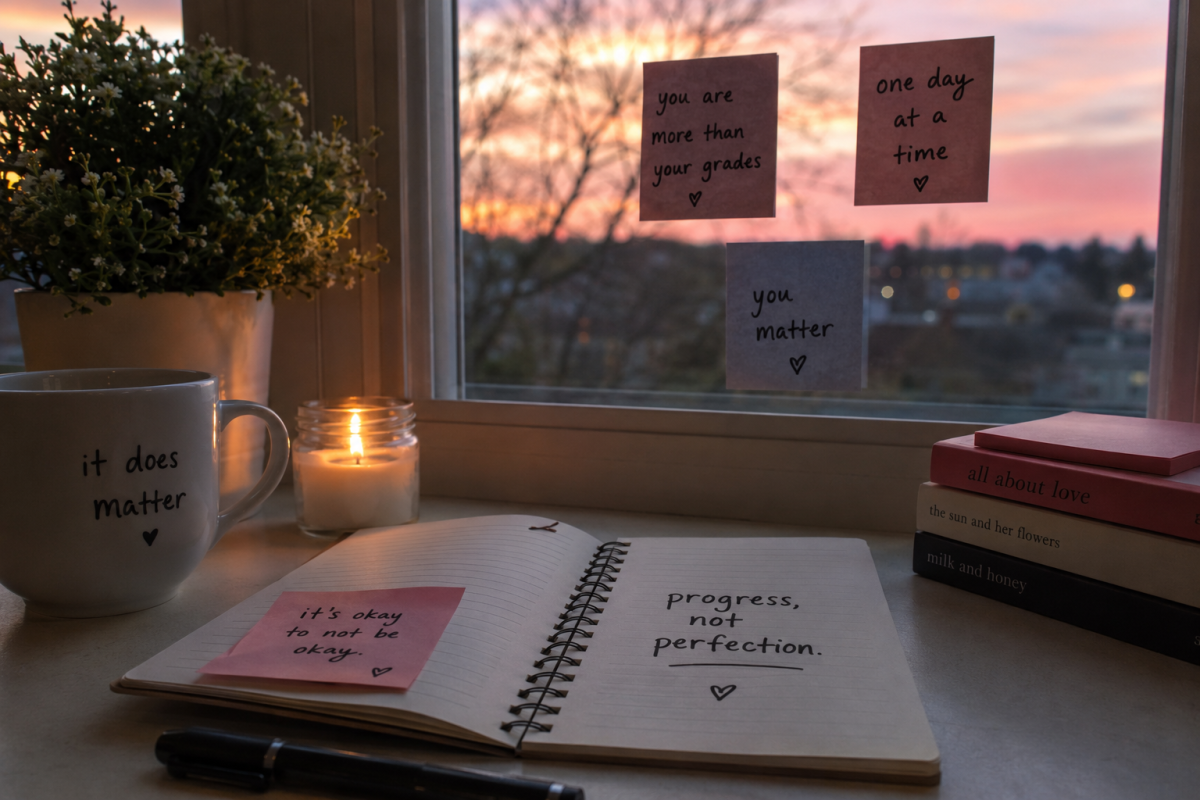
Most importantly, remember this: struggling does not mean you don’t care. Falling behind does not mean you’ve failed. The fact that you’re still trying, still hoping, and still looking for a way forward says more about you than any grade ever could. It does matter.
RESOURCES
Suicide and Crisis Lifeline: 988
Free confidential crisis services (The Trevor Project)
TheHopeLine
Crisis Text Line