Have you ever been scrolling through TikTok, and you come across a beauty influencer with drawers upon drawers of lip products? Or 30 different mascara tubes? Most see this and become jealous of all the mounds of expensive products these influencers have, but have you ever stopped to think that it’s just too much and too unnecessary? That most of the time, the products go unused and end up in a landfill wasting away.
According to Webster’s Dictionary, consumerism has been defined as “increasing consumption goods being economically desirable”. In simple terms, making more products makes those who are producing them richer. This was initially seen as a positive thing, but nowadays, it is often used as a derogatory term towards those who own way too much of a specific product for no reason.
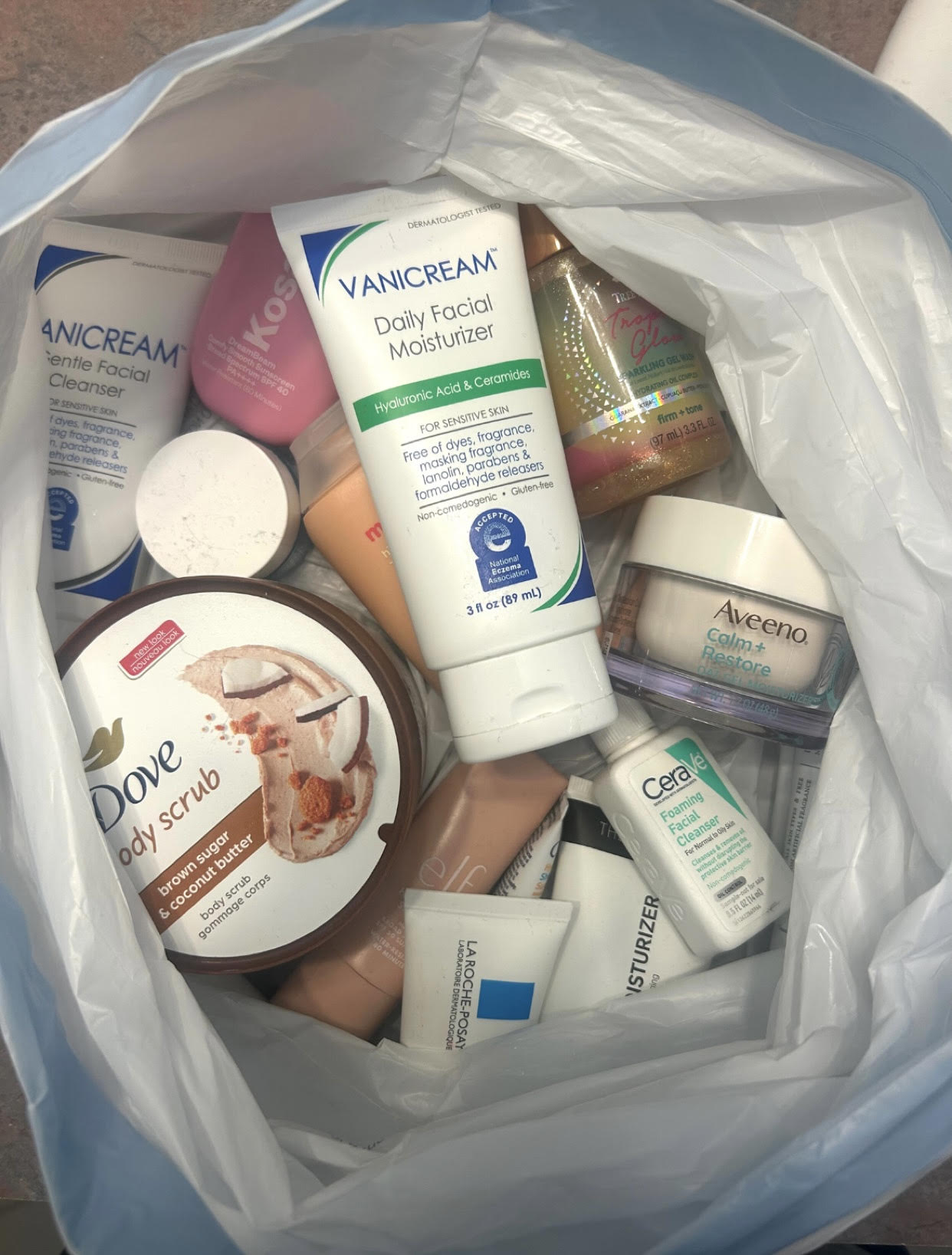
A prime example would be TikTok user @emilylulamay, who creates content based on her shelves upon shelves of body care products. Many users in the comments are bashing her for the unnecessary amounts of body care she owns, questioning why one person needs so many shower products. The answer is that nobody ever needs that large volume of products! 50% of it is likely to turn into waste, as a person in the U.S on average produced over 800 kilograms of waste annually. Why spend so much money on a thing you only need one of, when it could actually be going to someone who needs it?
Delving deeper into TikTok consumerism, the phrase “TikTok made me buy it”, or “Run don’t walk” has taken the app by storm. As of lately, when a content creator shows off their new clothing items, makeup products, or anything of the sort, the rest of TikTok scrambles to buy it.
“Run, don’t walk to Target to buy this new tank top!”
“TikTok made me buy this new pet hair vacuum!”
“All moms need this rechargeable baby bottle cleaner, buy it now!”
When you really look at it, it is all the same. Each item that you’re likely to be influenced to buy will lose its use within a week. Especially with the new addition of TikTok Shop to the app. Similar to Temu and Shein, TikTok Shop features many cheap items that are tailored to make it look like they are useful. Most items are cheap, on purpose, to get easily influenced people on the app to buy it as soon as possible.
Over time, many people end up with hundreds of variants of the same product, because “TikTok made them buy it”. A new Stanley Cup comes out, and consumers with six Stanleys already in their cabinet are all over it. However, even the trending water bottle changes up often. Stanleys, Hydrojugs, and Owalas. Then, when a consumer ends up with multiple of the same water bottle in different colors, what happens when that water bottle stops trending? They buy eight more of the new trending one? Thus, bringing it back to the line between collection and consumption.
So how do we draw that line? It comes down to intent and purpose in your purchases. To create a comparison, take museums for example. We collect ancient artifacts and parts of our history to make us remember. Museums are meant for remembrance of culture and kept for safekeeping. The same could be said for a collector of something like comic books. Many who collect items like comic books do it out of passion and interest in reading comics, which shows exemplary intent and purpose in buying a good deal of the same product.
Under those circumstances, it starts to become consumerism when an item begins to trend, like a makeup product, and everyone runs to buy it because of the trend. The cycle of trends repeats, and millions of people end up buying multiple of the exact same makeup product, just different brands. =
In summary, consumerism is a real problem in our society right now. Even though this is happening, solutions are very simple. The easiest way to combat ending up with lots of the same product is to simply use it all up before you buy a new one. Users on TikTok introduced “Project Pan” to begin the process of ending overconsumption. The challenge is to just use up all of the products you already own before purchasing anything else. If everyone made this not just a challenge, but a reality, we could stop harmful overconsumption in its path towards killing our earth.