






















You walk into class after studying for hours. You stayed up late, reviewed your notes, and really tried your best. Then you get your test back, and the grade is low. That feels pretty unfair. This is why many students start to wonder: should effort matter more than results?
Effort is something teachers always tell students to focus on. When you put in effort, you build important habits. You learn discipline, time management, and how to stay focused. These are skills that matter not just in school, but in real life too. Also, not all students learn at the same speed. Some students understand things quickly, while others need more time and practice. Even if both students work hard, only one might get the higher grade. That doesn’t always feel fair, especially for students who are trying their best but still struggling.
Research also supports the importance of effort. Psychologist Carol Dweck found that students with a growth mindset, who believe effort leads to improvement, are more likely to take risks and keep trying, even when things are difficult. When effort is recognized, students are more motivated and less likely to give up. This can lead to better learning in the long run.
However, results still matter. Tests and quizzes show what a student actually knows and understands. If students were only graded on effort, someone could try hard but never fully learn the material. That could become a bigger problem later, especially in subjects that build on previous knowledge. In the real world, results are important too. For example, a doctor needs to know how to treat patients correctly, and a pilot needs to fly safely. In those situations, effort alone isn’t enough, people depend on results.
There is also the issue of fairness. Effort is hard to measure. One student might say they studied for hours, while another studies less but understands more. Teachers can’t always see how much effort a student actually puts in outside of class. Because of this, grading only effort could be just as unfair as grading only results.
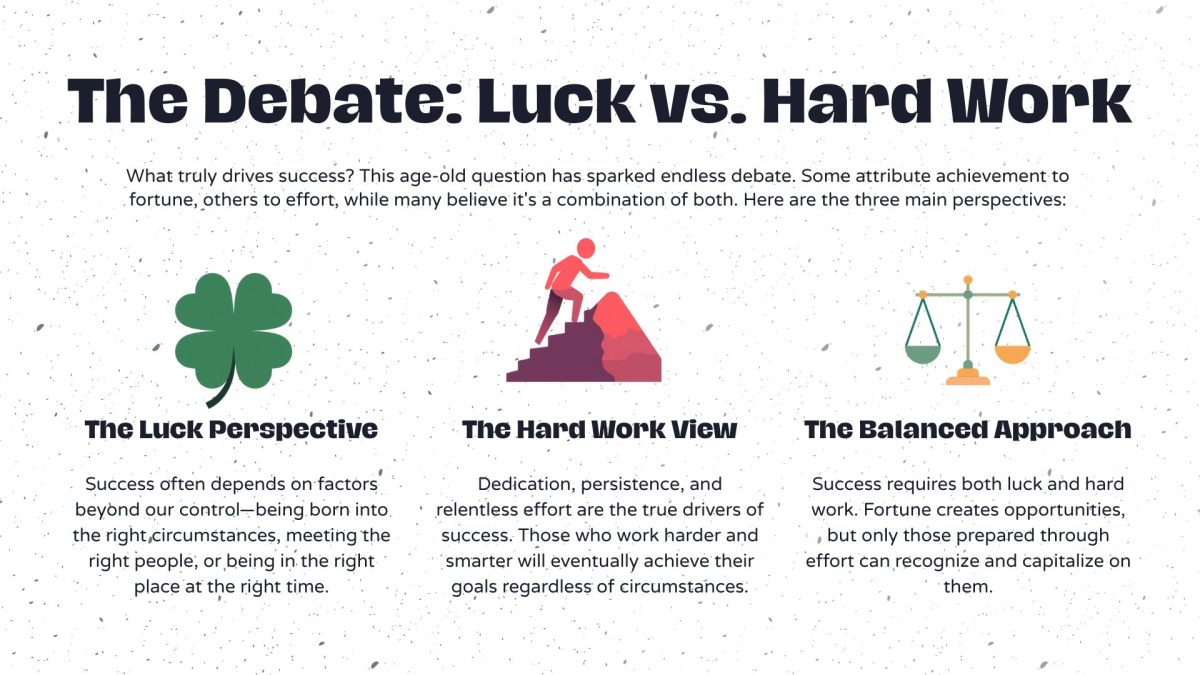
A better solution is to combine both effort and results. For example, homework, participation, and classwork can show effort, while tests and quizzes can show understanding. Both should count toward a student’s final grade. This way, students are rewarded for working hard, but they are also held accountable for what they learn. It gives a more complete picture of their progress.
In the end, effort alone shouldn’t determine a grade, but it also shouldn’t be ignored. A combination of effort and results is the fairest way to grade students because it values both hard work and learning.