







Here’s the revised article with the small edits applied — the closing line moved to the end, and the final two paragraphs merged to eliminate repetition:
“Will AI eventually take over all jobs?” It’s a question more people are starting to ask as AI becomes a bigger part of everyday life. AI is already replacing some tasks that humans used to do. While AI can make life easier and help businesses work faster, I do not think it should completely replace people in the workforce.
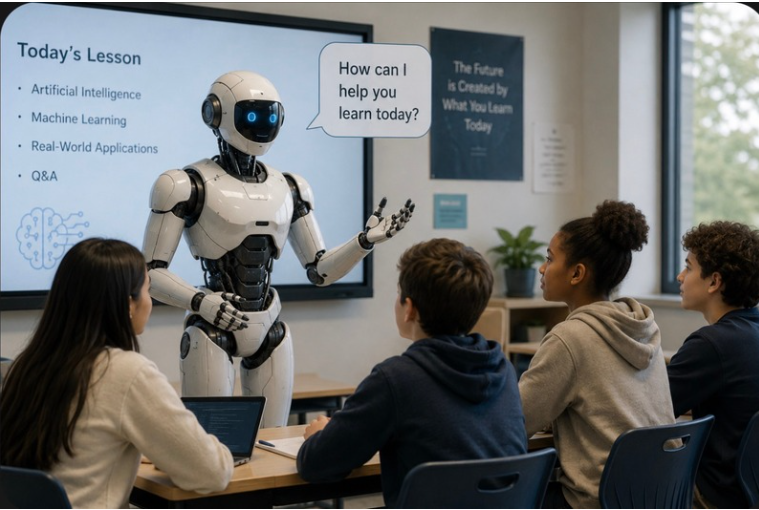
AI is becoming more common in schools, stores, hospitals, and businesses everywhere. Some companies use robots in factories to do repetitive work, while others use AI programs to write emails, organize schedules, or even create art and music. In Chicago, a new private school called Alpha School plans to use AI software to teach students subjects while adults act more like guides instead of regular teachers. Students spend part of the day learning through AI programs and the rest doing activities like coding and public speaking. Some people think this could help students learn faster, while others worry students may lose important human interaction. This shows how quickly technology is changing the way people work and learn.
One reason many people support AI is because it can do tasks faster and sometimes more accurately than humans. Businesses can save money by using machines that do not need breaks, vacations, or paychecks. For example, grocery stores use self-checkout machines to reduce the number of cashiers needed. Some fast-food restaurants even use AI to take customer orders. In dangerous jobs like construction or factory work, robots can also help keep workers safe.
However, there are many concerns about AI taking over jobs. If companies replace too many workers with technology, many people could struggle to find jobs. Jobs are important because they give people money, stability, and a sense of purpose. Losing jobs to AI could create financial problems for families and increase unemployment. Students today are especially worried because the careers they are preparing for may change in the future. My cousin, who attends Florida A&M University, told me, “I think AI is going to have a big impact on my future career because technology is becoming part of almost every job now.” Her opinion shows how many young people are already thinking about the future of work.
Even though AI is powerful, it still has limits. Machines cannot truly understand human emotions or experiences. Teachers, nurses, and therapists all depend on communication and empathy. A robot may be able to give information, but it cannot comfort someone the same way a real person can. Creativity is another important human skill. AI can generate ideas based on information it already knows, but humans create original thoughts through imagination and personal experiences.
Instead of completely replacing workers, I believe AI should be used as a tool to help people do their jobs better. Technology has always changed society. In the past, inventions like computers and the internet replaced some jobs but also created new ones. AI will probably do the same. People may need to learn new skills and adjust to changes, but humans will still play an important role in the workforce. AI will continue to grow and become more advanced, but society should focus on using it responsibly while making sure people still have opportunities to work and succeed. Human creativity, emotions, and personal connections are things technology can never fully replace.