


















In nature, flowers exist to grow, attract, and survive and humans mirror that purpose by giving the meaning as symbols of love, resilience, and renewal. Each of a flower’s petals holds their identity, so what does each of your petals represent?
It is proven that flowers culturally symbolize emotions, traditions, and life events just like when finding yourself, it is not just about becoming a new person, but remembering who you were before what the world made you to be. Mother nature’s flowers are soft, silent, rooted and have a way of conveying our emotions. Flowers do not rush toward definition: they grow.
Before a flower blooms, it spends time unseen. There is a season of darkness where nothing looks like progress, where growth feels slow, uncertain, lonely. This is the part we don’t talk about, the stage where we are shedding identities, questioning paths, sitting with discomfort instead of answers. But this is where we become beings. Flowers do not panic in the soil. They trust it. They allow themselves to be shaped by pressure, time, and patience. In the same way, finding yourself requires sitting with who you are before you are ready to show the world.
Some of the most popular flowers such as roses, sunflowers, lilies, tulips, often represent ideas of love, happiness, and other positive emotions, are used to express admiration, joy, and positive life changes. There are many more flowers that are rare and they are not talked about enough. For example, a Lotus flower (one of my personal favorites) symbolizes rebirth and purity, Queen of the Night Flower represents ephemeral beauty and transformation, Middlemist Red (Camelia) symbolizing rarity, passion, and treasured love, and lastly, Chocolate Cosmos representing love and passion. There are many rare flowers that are underrated, hidden in plain site on this earth.
While flowers flood the stores every February as symbols of romance, their meaning runs deeper than a single holiday. According to Kremp.com, a florist website, states that flowers are proven to have a positive impact on a person’s mood and emotional well-being. The sight and smell of flowers can evoke feelings of happiness, gratitude, and love.
Every individual interpret the meaning of nature, particularly flowers, and what type of flower they symbolize, their answers shifted my own thoughts and personal opinions.
Denise Davis, a retired teacher and grandmother loves the spring, as her favorite season. She decorates her house in colourful and energetic flowers every year. She believes a yellow rose symbolizes her aura, “I think I embody a yellow rose because it’s bright, beautiful.” A yellow rose also represents joy and to brighten one’s day, which is what she demonstrates perfectly.
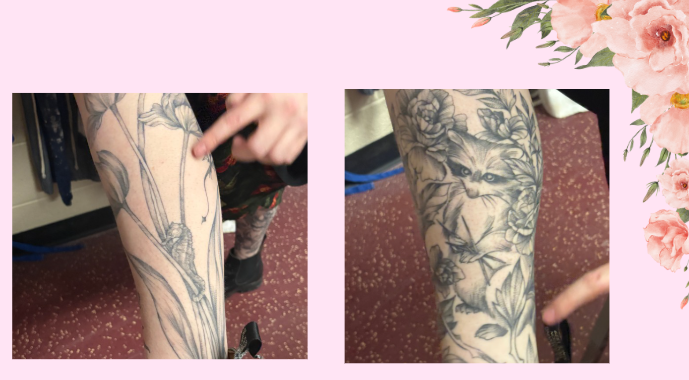
Ms. Sych, a BHS art teacher, provided insight on how they personally interpret the meaning of nature, particularly flowers. “I believe we need to go out and touch grass more and thank mother nature for the little things she has provided for us and this earth.” Ms. Sych also shared her tattoos of her parents favorite flowers, and people getting flowers as their chosen tattoo, and what they represent. “Now people are getting the tattoo flowers of personal significance.”
Your soul and the symbolism behind flowers connect with one another and are important because they can give people a visual way to express deep emotions, identity, and experiences. Also, to connect people and pursue the meaning of culture, memory, and the cycles of growth and change in life. Like flowers, we grow toward what sustains us.