
















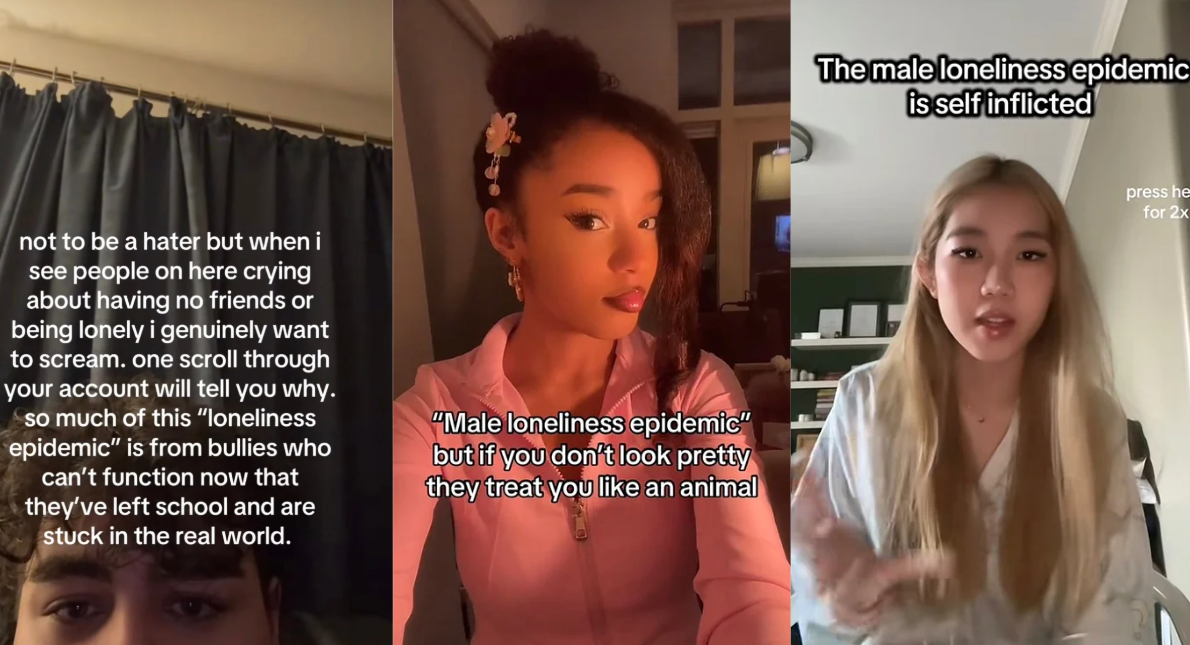
Amongst many TikTok buzzwords, terms, and theories, one has been prevalent for quite some time now. The male loneliness epidemic is described as widespread isolation of men as of lately, with many fingers pointing as to where it comes from, from phone usage to even women and their “behaviors.” This specifically is what raises the question of whether or not the male loneliness epidemic even exists.
Overall, many have reported being lonely throughout the 2020s, especially since the quarantine of COVID-19 that left many stuck at home for two years with little to no contact with the outside world; however, social media use during this time skyrocketed. The National Institute of Health (NIH) reported in 2024, “Decreased social interaction enhanced feelings of loneliness for some during the pandemic. One study relayed that 43% of respondents reported higher levels of loneliness during the pandemic.” Following 2020, in 2021 Daniel A. Cox’s article Men’s Social Circles are Shrinking featured a survey that revealed that men have 50% less inner-circle friends than women. Cox writes, “Thirty years ago a majority of men (55 percent) reported having at least six close friends. Today, that number has been cut in half. Slightly more than one in four (27 percent) men have six or more close friends today. Fifteen percent of men have no close friendships at all, a fivefold increase since 1990.” This recognition of the drop in close friendships in men was not initially recognized as an epidemic strictly among men but in most people. Vivek Murthy, a former surgeon general described the spike in loneliness as a “loneliness epidemic” in 2017. The United States Department of Health and Human Services provides a letter from Murthy under a 2023 study, Our Epidemic of Loneliness and Isolation. Murthy reports, “In the scientific literature, I found confirmation of what I was hearing. In recent years, about one-in-two adults in America reported experiencing loneliness. And that was before the COVID-19 pandemic cut off so many of us from friends, loved ones, and support systems, exacerbating loneliness and isolation.”
It can be seen that loneliness is not just an issue amongst men, so why is the issue being promoted that way? When searching for the answer, most heads may turn to TikTok. 2023 is when male loneliness picked up traction as something as seriously defined as an “epidemic,” specifically on TikTok, where men and women alike spoke up about whether male loneliness is an alarming issue. However, there’s been a trend in why some believe that men are starting to feel lonely, one of the key reasons aside from social media being women. Red-pill ideology, which promotes men as the oppressed sex and not women most commonly blame women for the feeling of loneliness plaguing men. It is believed that certain behaviors perpetrated by women make the dating pool smaller and inaccessible to men whose idea of a perfect or adequate partner falls into the right-wing, red-pill category. Although speculation is raised that this viewpoint on male loneliness may be held largely by conservative or right-leaning men, it should be noted that not all men experiencing loneliness share this sentiment and may just be in search of an answer. The issue at hand, men with extreme ideologies blaming others for this epidemic, is especially dangerous as we live in a patriarchal society and have for centuries. TikTok user and content creator CJ_theAlchemist speaks on men with this outlook on life and women in general in his video captioned “The male loneliness epidemic is self-inflicted.” CJ states, “It’s hard for me to feel bad for incels because most of the people that are suffering from this male loneliness epidemic are really just a bunch of dudes that are upset that they can’t treat women any kind of way and they don’t have that entitlement to a woman’s body like their dads and their grandads did.”
The male loneliness issue is likely being promoted as a male issue only because of the circulation of red-pill ideology. The entitlement to a woman’s body as CJ mentioned is one of many ways some men view a woman, as well as for a woman to be subservient, helpful, and out of the way. Since women have moved far past this and started to neglect this idea even more, the population of men who feel this goes directly against what women should be may start to feel as if they don’t have any romantic options. However, it is still important to note that this is the romantic aspect of this rise in loneliness. Surveys as mentioned earlier mainly focused on different types of relationships as a whole, while TikTok typically pinpoints a lack of romantic relationships amongst men, especially those with radical right ideas. This could be answered with the speculation that these right-winged men believe men in general are becoming weaker, only engaging in friendships with other men who lean in the direction of the manosphere and red-pilled content. Or, the issue may not just be a men’s issue at all.
Both men and women report being lonely, and while societal expectations may cause men to feel significantly more alone, it is not the fault of women. In general, with the rise of misogynistic viewpoints being legitimized as opinions that should be taken into consideration, this may contribute to the issue. In retrospect, to answer the question of whether the male loneliness epidemic exists or not, the answer is most likely not in the way TikTok frames it to be. Loneliness does not pick and choose who to affect, anyone and everyone is capable of feeling intense feelings of isolation. The best approach to this epidemic is not only realizing that anyone can be impacted, but that men certainly do face issues when it comes to the ability to express themselves emotionally, seeing as there is stigma around a man opening up and being vulnerable. Suicide rates for men are higher, there are heavy expectations to keep this sense of stoicism, and the very same people who push patriarchal ideologies hurt men in the process when trying to unpack men’s mental health problems.